
Debates on inclusion and sustainability are shaped by rich and evolving vocabularies. In this glossary, we draw on existing definitions and interpretations to help clarify key terms and concepts used in our report, podcasts, and events, with a view to providing a useful reference point for people engaging with these complex and often contested ideas.

‘The Scottish Government is committed to moving from a linear ‘take, make and dispose’ economic model to a circular economy where materials and goods are valued and kept in use for as long as possible. In line with the First Minister’s priorities of growing the economy and tackling climate change, there is increasing evidence that transitioning to a more circular economy can drive sustainable growth, increase supply-chain resilience, create jobs and encourage innovation while tackling the twin crises of climate change and biodiversity loss.’ (Scot Gov, 2025).

‘Commons and commoning have become points of departure for the development of new radical literatures that seek to enhance societal transformations. Hence, the issue of their expansion has often been framed in opposition to the expansion of capital and thus acquires a highly symbolic and political value’ (Varvarousis, 2020).
‘First enshrined in law in the Magna Carta in 1215, Common Land traditionally sustained the poorest people in rural communities who owned no land of their own, providing them with a source of wood, bracken for bedding and pasture for livestock. […] At one time nearly half of the land in Britain was Common Land, but from the C16th onwards the gentry excluded Commoners from land which could be ‘improved’ through agriculture. That is why most Common Land is now found in areas with low agricultural potential, but areas which we know hold value for high conservation significance and natural beauty’ (https://foundationforcommonland.org.uk).
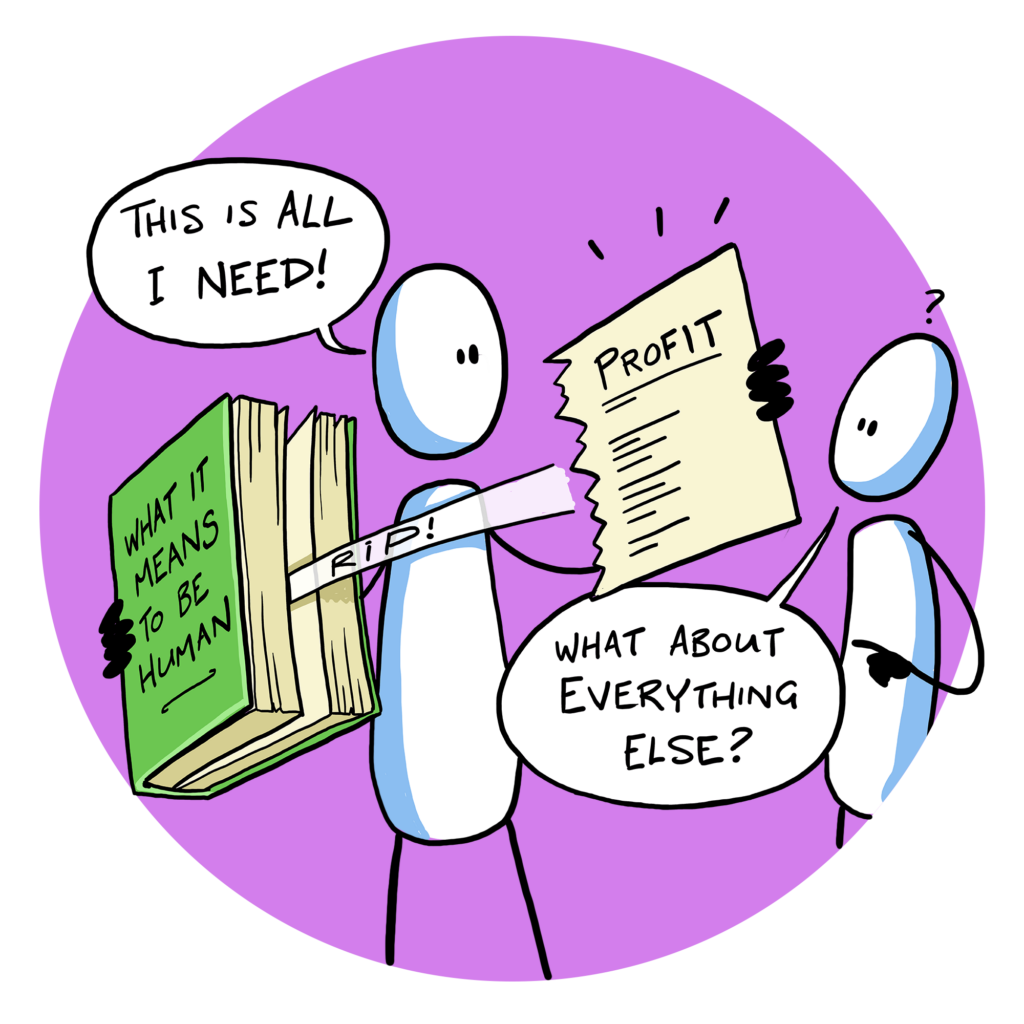
‘Degrowth is first and foremost a radical critique of the growth ideology […which] is ecologically unsustainable, because it promotes the continuous expansion of material extraction and energy use while discarding increasing amounts of waste that damage the sink capacity of ecosystems; it is socially unjust because it (re)produces class, gender and racialinequalities […; and it] is culturally devastating because, while establishing itself as universal hegemony, it annihilates all the other forms of human life, ways of beings and epistemologies.’ (Alice Dictionary, 2019)
‘Degrowth […] aims to promote and act for ecologically sound and socially equitable societies. Degrowth hints to a leaner societal metabolism (less material extraction, less throughput, less waste, etc.), this provides the conditions for supporting lives that merit the joy to be lived. However, the shrinking of societal metabolism for diminishing the socio-ecological impacts of capitalist expansion shall not mislead the reader; the emphasis of degrowth is not on less but on different.’ (Alice Dictionary, 2019)

‘Doughnut Economics proposes an economic mindset that’s fit for our times. It’s not a set of policies and institutions, but rather a way of thinking to bring about the regenerative and distributive dynamics that this century calls for. […] The starting point of Doughnut Economics is to change the goal from endless GDP growth to thriving in the Doughnut [between the social foundation and the ecological ceiling]. Doughnut Economics recognises that human behaviour can be nurtured to be cooperative and caring, just as it can be competitive and individualistic. It also recognises that economies, societies, and the rest of the living world, are complex, interdependent systems that are best understood through the lens of systems thinking. And it calls for turning today’s degenerative economies into regenerative ones, and divisive economies into far more distributive ones. Lastly, Doughnut Economics recognises that growth may be a healthy phase of life, but nothing grows forever: things that succeed do so by growing until it is time to grow up and thrive instead’ (https://doughnuteconomics.org).
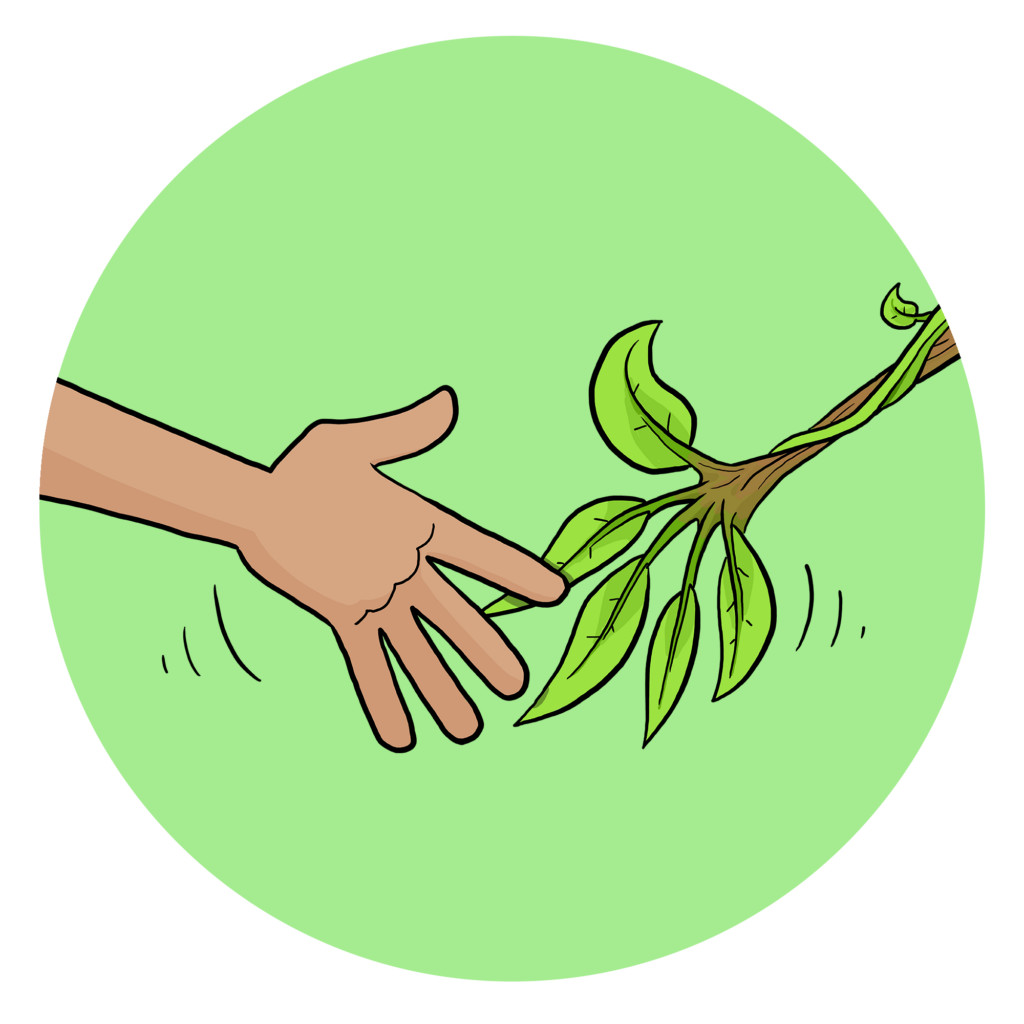
‘I define intersectional environmentalism (IE) as an inclusive approach to environmentalism that advocates for the protection of both people and the planet. IE argues that social and environmental justice are intertwined and that environmental advocacy that disregards this connection is harmful and incomplete. IE focuses on achieving climate justice and ampifyinghistorically excluded voices, and approach environmental education, policy, and activity with equity, inclusion, and restorative justice in mind’ (Thomas, 2020).

‘The central idea of post-growth is to replace the goal of increasing GDP with the goal of improving human wellbeing within planetary boundaries. Key advances discussed include: the development of ecological macroeconomic models that test policies for managing without growth; understanding and reducing the growth dependencies that tie social welfare to increasing GDP in the current economy; and characterising the policies and provisioning systems that would allow resource use to be reduced while improving human wellbeing’ (Kallis et al., 2025).
Illustrations by Ben Nightingale ©